Cyclists.com
A global library of cycling routes, with GPX files, road facts and a simple way to organise group rides.
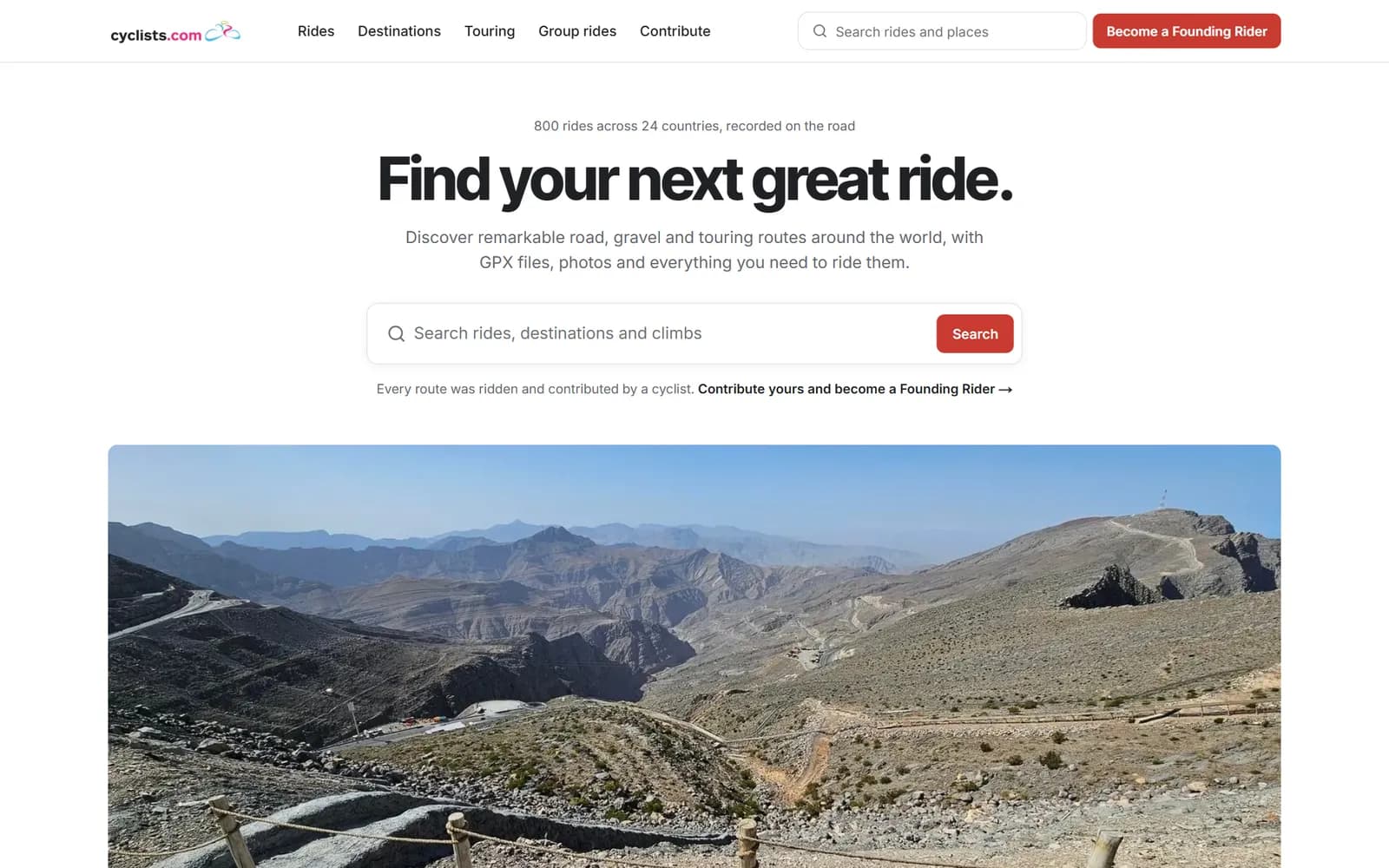
Cyclists.com helps road, gravel and touring cyclists decide where to ride. It brings together 800 routes in 515 places across 24 countries, along with 36 multi day tours and 341 climbs, each with a map, a free GPX file and the facts riders actually need. Routes come from GPS recordings made by riders, and from signed cycle routes and climbs mapped from OpenStreetMap. The site is deliberately audience first: it has no revenue model yet, but its data is already structured for partnerships, travel and sponsored collections.
- Stage
- Recently launched
- Sector
- Travel & Publishing
- Performous role
- Owner. Concept, content and platform
- Website
- cyclists.com
- Where it stands
- Live since August 2026 with 800 routes across 24 countries. Built audience first: there is no revenue model in place yet.
Why it needed to exist
Good cycling route information is scattered across personal blogs, ride apps, club chats and memory. A rider visiting a new place rarely knows which roads are quiet, where the climbs are, or how far it is between cafés.
Organising a group ride has the same problem. Clubs paste names into a WhatsApp message until nobody is sure who is coming. Both problems are solved by structured data presented clearly, which makes them a natural fit for software.
The product, as it works today
Route discovery
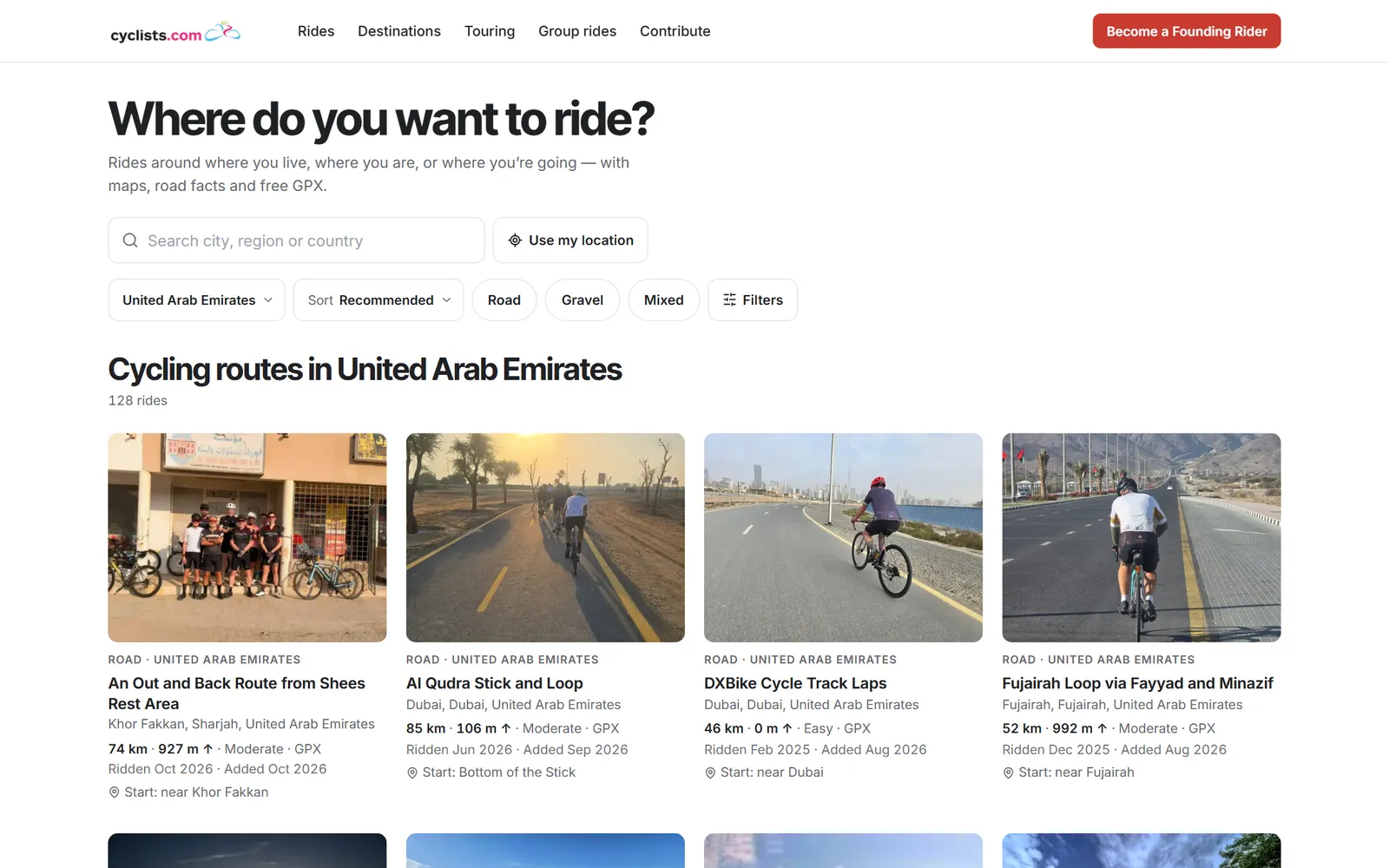
Search by place or by current location, then filter by country, distance, surface and difficulty. Routes are organised from country to region to destination, so every place has its own useful page.
Measured route facts
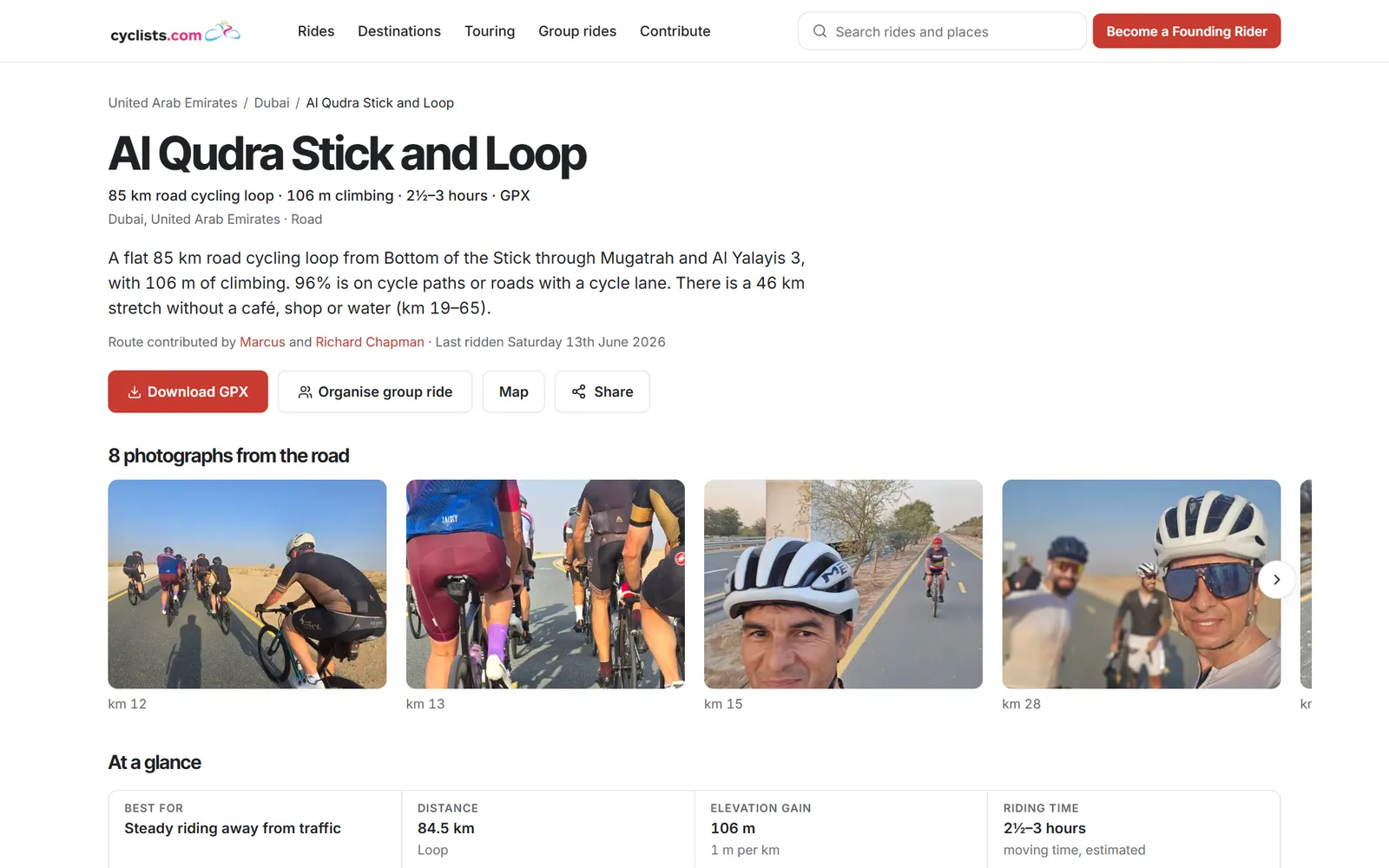
Each route shows distance, climbing, estimated riding time, how much is paved, how much runs on cycle paths and where the gaps between food and water are, all measured from the GPS line and open map data.
Maps, profiles and GPX
Interactive maps, elevation profiles, photos placed along the route by kilometre, climate data for the best months to ride, and a free GPX download for every route and tour stage.
Group rides
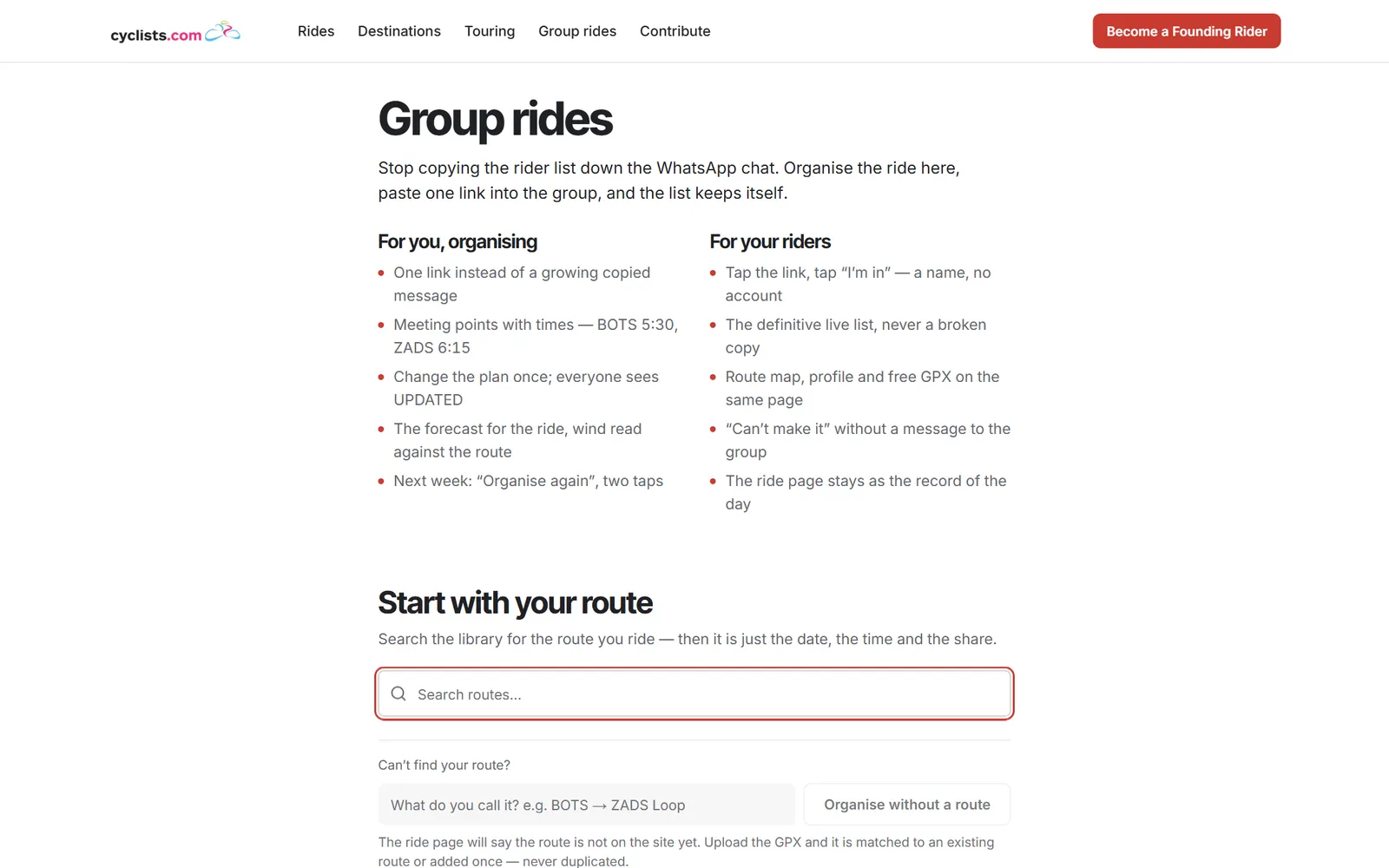
An organiser shares one link, riders tap “I'm in” without creating an account, and the list keeps itself up to date, with meeting points and a wind forecast for the route.
Founding Riders
Cyclists can contribute their own rides by uploading a Strava export, GPX, FIT or TCX file. Files are checked in the browser before upload, and contributors are credited publicly or anonymously.
Strava sync and editorial tools
New rides on the founder's Strava account arrive automatically as draft route pages, and a private admin handles photos, tours, destinations and contributor submissions.
What each part is for
- Data led pages
- Each recorded ride produces a detailed, accurate page with little manual writing, so the library can grow quickly at low cost.
- Practical route facts
- Details such as the best months to ride and the gaps between cafés give riders a reason to trust the site and return, building the audience partners value.
- Group ride organiser
- A free tool that clubs use every week brings riders back between trips, not only when they travel.
- Contributor programme
- Riders add routes in places the founder has not ridden, extending coverage without paid content production.
- Partner ready data
- Places to stay and sponsored collections are already modelled, so monetisation can be switched on without rebuilding the platform.
How it was built
How AI helped build it
Cyclists.com was built with AI coding tools between May and October 2026, with most of the work done in August and September. AI was also used behind the scenes to draft route descriptions strictly from measured facts, vet photos and prepare news, with a person approving what is published.
AI inside the product
None. AI was used to design and build the platform, not as a feature of it.
Integrations
- OpenStreetMap
- MapLibre
- Strava
- Open-Meteo weather
- Supabase
- Brevo email
- Vercel

Have an idea, or a business that could run better?
We're always glad to talk about new ventures, investment ideas, technology, or how an existing business could operate more efficiently.